Brewing basics.
A starting recipe, then a cup made to your taste.
Three variables decide almost everything: how hot the water is, how long the leaf sits in it, and how much leaf you used. Get those roughly right and cheap tea tastes better than expensive tea brewed carelessly.
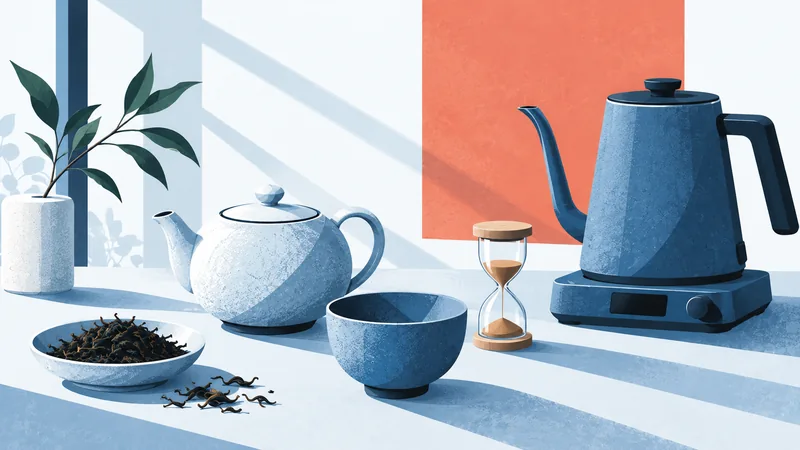
Water temperature
Worth taping inside a cupboard door.
| Tea | Water | Steep |
|---|---|---|
| Green | 70–80°C | 1–2 min |
| Gyokuro | 50–60°C | 2 min |
| White | 75–85°C | 3–5 min |
| Oolong | 85–95°C | 2–3 min |
| Black | 95–100°C | 3–4 min |
| Pu-erh & dark | Full boil | 3–5 min |
| Herbal tisane | Rolling boil | At least 5 min; follow packet |
These are flavour starting points, not fixed rules. Follow the packet if it gives a different recipe, especially for finely cut leaves, tea bags or concentrated small-pot preparations.
Use a thermometer or a temperature-controlled kettle when you need a particular temperature. Cooling time varies with the amount of water, the vessel and the room; a fixed number of minutes cannot reliably give a fixed temperature.
How much leaf
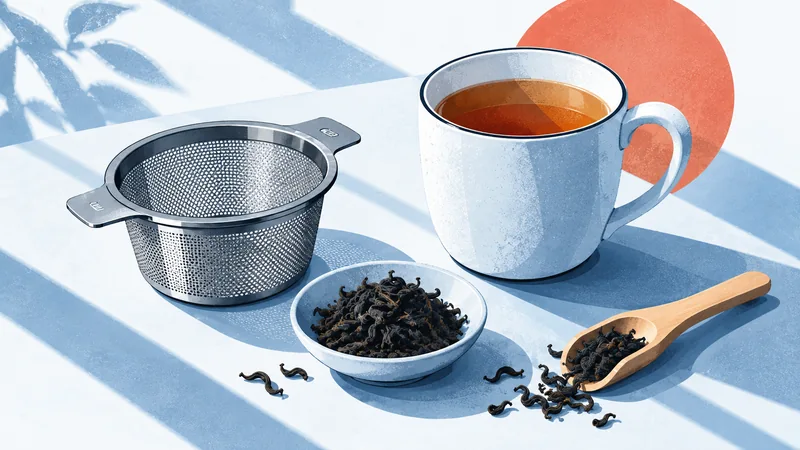
About 2–3 g per 200 ml cup — a rounded teaspoon for most leaf, a heaped one for big fluffy whites and herbals, which take up far more room per gram. If a tea tastes thin, add leaf before you add time. Longer steeping mostly adds bitterness; more leaf adds body.
Re-steeping
Whole-leaf teas are not single-use. Good oolong, pu-erh and shaded green will give three or more infusions, and the second is frequently better than the first. Add a little time with each round and keep the leaf from sitting wet for hours between them.
Water itself
Start with fresh drinking water that tastes pleasant on its own. If tap water has a strong taste, try filtered water and compare the resulting cup.
Be first to sip. No spam — one note when we open.